The Principles of Evolving Walls™
A room changes when the art changes. People change when the room changes. VivantHaus exists for both.
Evolving Walls™ noun — a way of living with original art in which works are lived with, cared for, and in time allowed to continue their journey on another wall.
The term is ours. VivantHaus originated it to name something the art world had no vocabulary for: not renting, not collecting, not trading, but a continuing relationship between a house and a body of work that neither owns outright nor gives up.
Everything else we do — the curation, the custody, the membership, the logistics — exists to make Evolving Walls™ possible in an ordinary home, on an ordinary Tuesday, without the owner having to become a registrar.
Seven ideas the club is built on
A wall is not a destination
Art arrives somewhere. It does not arrive finally. The moment a work is hung is the beginning of its life in that house, not the end of its journey — and treating it as the end is what turns a collection into an inventory.
Attention has a half-life
The first month is electric. The first year is companionable. By the fifth, the painting has become architecture — as invisible as the light switch beside it. This is not a failure of the work or of its owner. It is simply what sustained proximity does to looking.
Ownership protects. Movement preserves
A locked room keeps a painting safe and stops it being seen. Both matter. Evolving Walls™ separates the two obligations: we carry the protection so that the member is free to carry only the looking.
The room is a collaborator
The same work fails in one house and succeeds three streets away. Light, height, wall colour, the hour you walk past it — these are not conditions surrounding the work. They are part of it. A work that moves is a work given more than one chance.
Absence completes the encounter
You do not know what a painting meant to you until the wall is bare. Members describe the fortnight after a continuation as the moment the work finally said what it had been saying all along.
A collection circulates rather than accumulates
Museums have understood this for a century and nobody calls it indecision. Rooms are rehung. Works rest, then return transformed by their absence. We have taken that ordinary institutional habit and given it to private houses.
Care is the price of movement
Nothing may travel that is not documented, insured, condition-reported and handled by people who do this for a living. Every principle above depends on the last one being kept without exception.
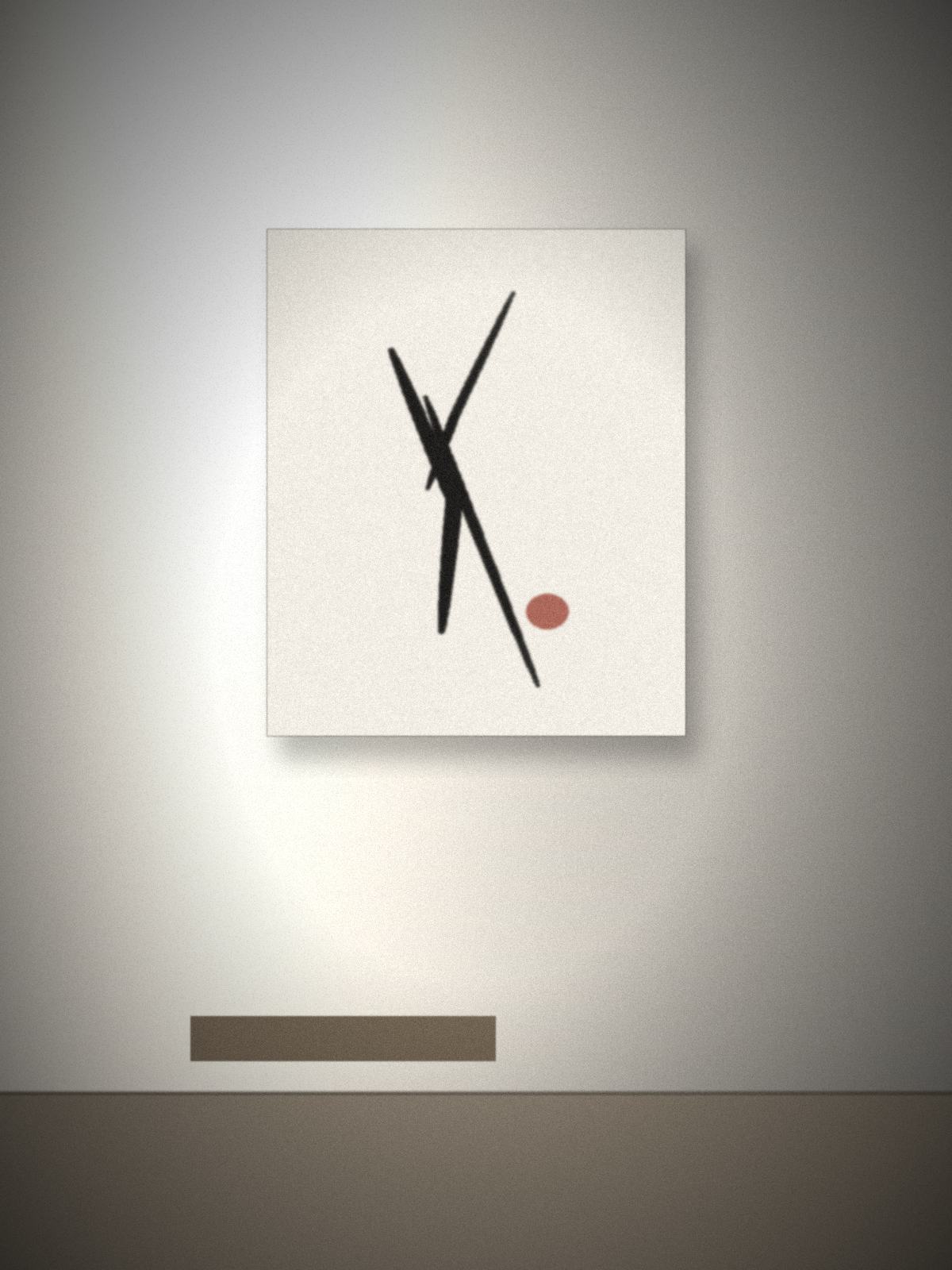
A member's hallway, photographed between placements. The interval is part of the design.
What this changes for a house
A house on Evolving Walls™ is never finished, and stops trying to be. The pressure to make one perfect and permanent decision — the pressure that keeps most people buying prints instead of paintings — simply lifts.
Members report the same three things. They look more. They talk about the work more, because it is new often enough to be worth mentioning. And when they finally do buy something outright, they know exactly why, because they have lived with it through two winters rather than admired it for two minutes in a gallery.
That last point matters more than it sounds. Evolving Walls™ is not an alternative to owning art. It is the only honest way we know to find out what is worth owning.
- Not rental. Rental has a return date and no relationship. Evolving Walls™ has neither a fixed end nor an obligation to give anything back.
- Not leasing. There is no financing structure here and no residual value to settle.
- Not a subscription to objects. The subject is the wall and the person in front of it, not the delivery of items.
- Not an investment programme. Works may appreciate. That is not what any of this is for.
We would rather one work were properly seen by forty people than owned in silence by one.
Evolving Walls™, The Living Collection™ and The Curatorial Cycle™ are terms originated by VivantHaus.
Begin an Evolving Wall.
Membership is limited and begins with a conversation about your rooms rather than your budget.